
Building a Thinking Culture on the Shop Floor
Factories rarely lack data. They lack a routine in which the people closest to the problem are expected to think about it out loud, every day, for five minutes.
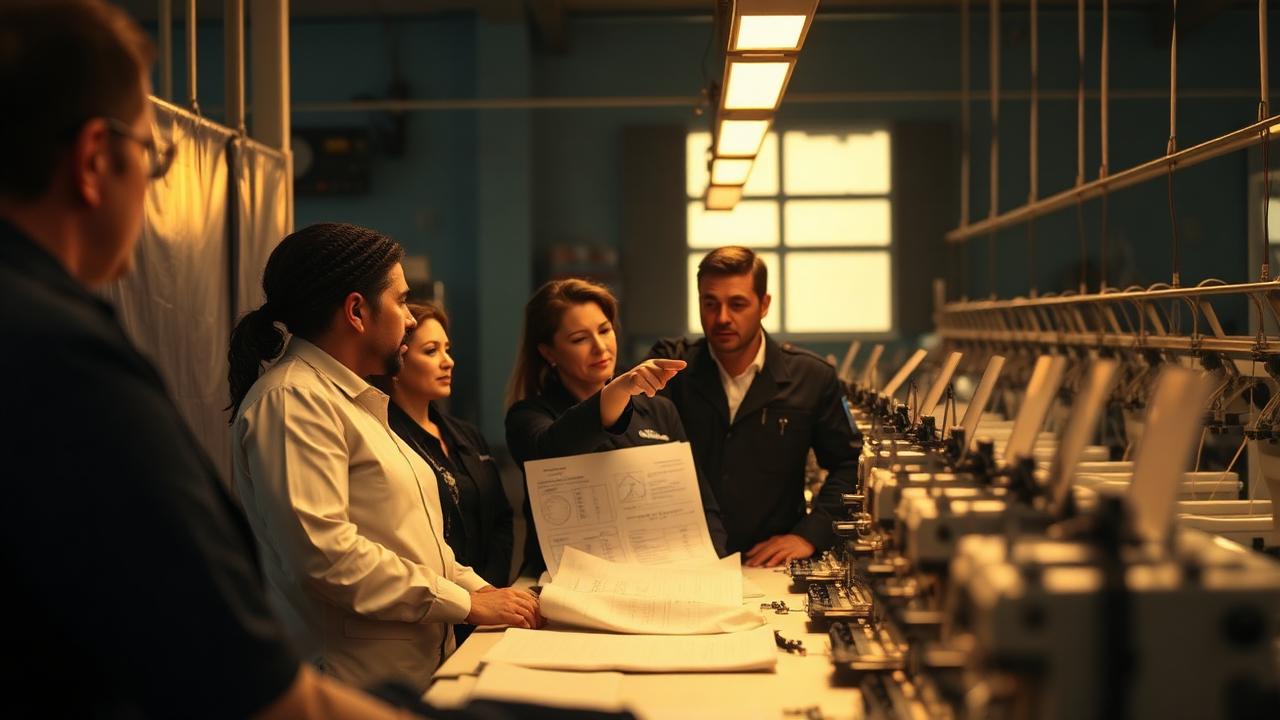
The five-minute huddle
Same time, same place, standing, one board. Yesterday's output and defects, today's target, one obstacle, one owner, one date. When the huddle runs longer than five minutes, it has become a meeting and attendance will decay within a month.
- Start on time even if the supervisor is late
- One obstacle per day — a list of twelve is a list of none
- Close yesterday's action before opening today's
Ask why the process allowed it
The difference between policing and problem-solving is one question. "Who did this?" ends information flow; "what in the process made this possible?" continues it. Operators report early only where reporting is safe.
Make improvement visible
Post the small wins with the operator's name on them. A line that can see its own improvement history proposes the next one without being asked — which is the only sustainable version of continuous improvement.
More field notes
- AQL Sampling in Practice: Garment Quality Control Done Right
A practical garment quality control guide to AQL sample sizes, switching rules and the three habits that quietly invalidate a final random inspection.
- Digital Traceability: The First 90 Days
A realistic rollout sequence for material traceability, from PO mapping to shop-floor scanning discipline.
- Lean Manufacturing Without Layoffs: Balanced Sewing Lines
Lean manufacturing in apparel: how line balancing, takt time and WIP control raise output while protecting operators — with the metrics that prove it.