How garment quality inspection works, stage by stage
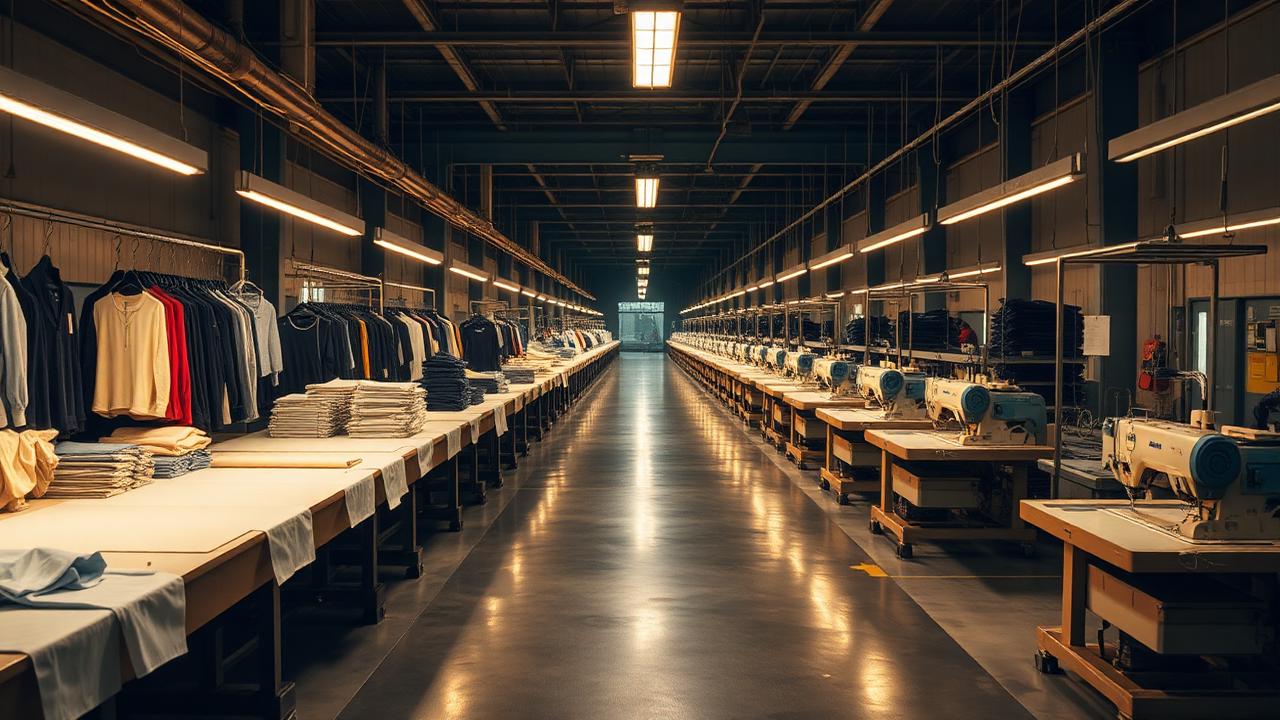
Inspection is a detection system, not a quality system. Its job is to tell you fast enough to correct the process while the order is still on the line.
Every service, study and product on NOSK.life is free of charge — we never take a single penny from anyone.
How it works
1.In-line inspection
Checks work at the operation that creates it, typically every 1–2 hours per operator group. Catches the defect within minutes so only a few pieces are affected.
2.End-line inspection
Full garment check at the line exit measuring DHU (defects per hundred units). Rising DHU on one defect code points straight at a workstation or a machine setting.
3.Final random inspection
Statistical sampling from packed cartons using an AQL plan: lot size gives a sample size and accept/reject numbers for major and minor defects.
4.Corrective action
Every reject triggers root-cause analysis and a documented CAPA. Without the CAPA loop, the same defect returns on the next order.
Quick reference
- Healthy end-line DHU
- Under 10 for basics
- Typical inspection level
- General Level II
- Major defect
- Affects function, fit or saleability
- Minor defect
- Visible but does not affect use
Checks you can run this week
- Use one shared defect code list across in-line, end-line and final.
- Plot top three defect codes daily per line and act on the top one.
- Verify the AQL sample is drawn randomly across cartons, not from the top layer.
Free downloads for this topic
Print-ready A4 PDF sheets from the NOSK.space garment media library — free of charge, no sign-up.
Single jersey knit swatch card
Loop structure illustration with GSM range, stretch behaviour, expected shrinkage and ball-point needle sizes for cotton single jersey.
Denim 3/1 twill swatch card
Twill line diagram with weight in oz and g/m2, stretch ranges for elastane denim, shrinkage expectations and jeans-point needle sizes.
Cotton poplin plain weave swatch card
Plain weave grid with shirting weight ranges, bias-only stretch notes, shrinkage targets and sharp needle sizes for light wovens.
Free studies and toolkits that use this
This explainer supports the following NOSK.space learning paths and toolkits — all free of charge, with no payments and no paywalls.
Free learning · Foundation
Garment Quality FoundationsInspection systems, defect classification, AQL decisions and corrective action from first principles.
Free learning · Advanced
Standards & Compliance MasterySocial, chemical and product-safety compliance: audit readiness, evidence packs and supplier governance.
Free toolkit
AQL Inspection ToolkitSampling tables, defect tally sheets and a lot-disposition worksheet ready for final random inspection.
Free toolkit
CAPA Documentation PackNCR, containment log, root-cause worksheet, action plan and effectiveness verification templates.
Real contacts for this topic
Factories, mills, suppliers, buyers and industry bodies from the free NOSK.space garment directory that work directly with how garment quality inspection works, stage by stage. Every detail below is published on the organisation's own site and each link opens that site — free of charge, no introductions sold, no commission taken.
Marks & Spencer
London · United Kingdom
UK retailer publishing clothing supplier and factory information
- Address
- Waterside House, 35 North Wharf Road, London W2 1NW, United Kingdom
- Phone
- +44 20 7935 4422
Primark
Dublin · Ireland
Value fashion retailer with a public global sourcing map
- Address
- Arthur Ryan House, 22-24 Parnell Street, Dublin 1, D01 P7W2, Ireland
- Phone
- +353 1 888 0500
BESTSELLER
Brande · Denmark
Danish fashion group sourcing across Asia
- Address
- Fredskovvej 5, 7330 Brande, Denmark
DBL Group
Dhaka · Bangladesh
Vertically integrated knitwear manufacturing, spinning, dyeing and printing
- Address
- South Avenue Tower, House 50 (6th Floor), Road 3, Gulshan Avenue, Dhaka 1212, Bangladesh
Where this fits in sourcing
This topic is used at the following stages of the free NOSK.space sourcing guide, which links each decision to the questions to ask and the real organisations to approach.
- Stage 6: Contract and purchase order drafting
Write down every technical decision you have made so it is enforceable, not remembered.
- Stage 7: Payment terms and trade finance
Agree who carries the risk at each step, and tie every payment to a verifiable event.
- Stage 8: Quality standards and inspection
Agree the pass or fail rule before the first carton is packed.
Common questions
- Does more inspection improve quality?
- No. Inspection detects; process control improves. Use inspection data to change the operation, machine or method that produced the defect.
- How much does access to this cost?
- Nothing. Every service, study and product on NOSK.life is free of charge — we never take a single penny from anyone.
Finished this explainer?
Tick it off to track your own progress in the free student portal. It is stored on this device only — no login, no account, no fees.
Jobs this knowledge leads to
Real garment industry roles that hire for exactly this skill, with the employers that recruit them. Free to browse — no fees, no commission.
Quality & compliance · Entry level
Quality Controller (Inline / Endline QC)
Checks garments at the operation and at endline, records defects and stops problems travelling down the line.
Open the role guideQuality & compliance · Senior
Quality Assurance Manager
Owns the quality system: AQL policy, audit readiness, needle control, root cause and the buyer's technical relationship.
Open the role guideSourcing & buying office · Senior
Sourcing / Vendor Manager (buying office)
Sits on the buyer's side: selects suppliers, places and moves orders, and develops factory capability.
Open the role guide
More free media
- Order to shipment: how a garment order really flows
Every stage from tech pack to final inspection, what each stage owns, and the handovers where orders usually slip.
- Woven vs knit: how fabric construction changes everything
Warp and weft versus loops and courses — why the same fibre behaves completely differently once it is woven or knitted.
- How to read a fabric test report without guessing
GSM, shrinkage, colour fastness, pilling and tensile results — what each line means and which failures actually stop production.