
Woven vs knit: how fabric construction changes everything
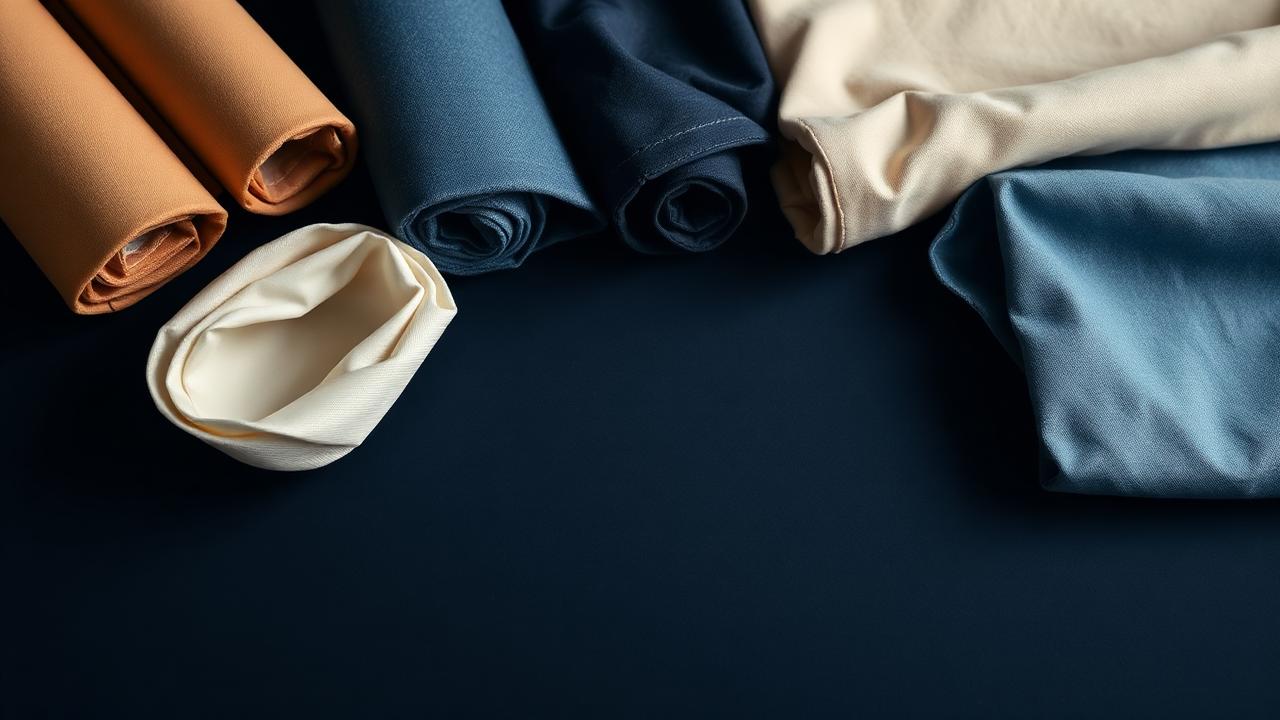
Almost every fit, shrinkage and sewing problem on a garment traces back to construction rather than fibre. A woven fabric holds two straight yarn systems locked at right angles; a knit is a single yarn forming loops that can move. Once you can read construction from a swatch, you can predict how the fabric will cut, sew, press and wash.
Every service, study and product on NOSK.life is free of charge — we never take a single penny from anyone.
How it works
1.Woven: warp and weft interlace
Warp yarns run the length of the roll under tension; weft yarns cross them. The interlacing pattern (plain, twill, satin) sets drape, strength and surface. Stability is high, stretch comes only from bias or elastane.
2.Knit: loops build courses and wales
One yarn forms loops across a course; stacked loops form wales. Because loops can extend and recover, knits stretch in every direction and recover to shape — which is why they need a stretch stitch, not a lockstitch, at load-bearing seams.
3.Grain decides how it hangs
Cutting off-grain gives twisted legs, gaping fronts and spiral in tubular knits. Check grain against the selvedge on wovens and the wale line on knits before the marker is approved.
4.Finishing locks in the behaviour
Compacting, mercerising, sanforising and heat-setting decide residual shrinkage and skew. Always test the finished fabric, never the greige, because finishing is where most of the dimensional change is fixed.
Quick reference
- Woven stretch
- Low, except on bias or with elastane
- Knit stretch
- 20–100% depending on structure
- Typical shrinkage tolerance
- ±3% after 3 wash cycles
- Grain tolerance
- Skew under 2% of panel width
Checks you can run this week
- Run a 50 × 50 cm shrinkage template on finished fabric before bulk cutting.
- Confirm wale/selvedge direction is marked on every ply before spreading.
- Test seam slippage on wovens above 200 g/m² with a low-twist weft.
- Check knit spirality on a washed sample garment, not on flat fabric.
Free downloads for this topic
Print-ready A4 PDF sheets from the NOSK.space garment media library — free of charge, no sign-up.
Single jersey knit swatch card
Loop structure illustration with GSM range, stretch behaviour, expected shrinkage and ball-point needle sizes for cotton single jersey.
Cotton poplin plain weave swatch card
Plain weave grid with shirting weight ranges, bias-only stretch notes, shrinkage targets and sharp needle sizes for light wovens.
Free studies and toolkits that use this
This explainer supports the following NOSK.space learning paths and toolkits — all free of charge, with no payments and no paywalls.
Free learning · Foundation
Garment Quality FoundationsInspection systems, defect classification, AQL decisions and corrective action from first principles.
Free learning · Intermediate
Sustainable Manufacturing EssentialsMaterials, water, energy and circularity — measurable sustainability for production teams.
Free toolkit
Garment Calculator SuiteConsumption, efficiency, costing and capacity calculators covering everyday production maths.
Real contacts for this topic
Factories, mills, suppliers, buyers and industry bodies from the free NOSK.space garment directory that work directly with woven vs knit: how fabric construction changes everything. Every detail below is published on the organisation's own site and each link opens that site — free of charge, no introductions sold, no commission taken.
Arvind Limited
Ahmedabad · India
Denim, woven shirting and garment manufacturing
- Address
- Naroda Road, Ahmedabad 382 345, Gujarat, India
- Phone
- +91 79 6826 8000
- investor@arvind.in
Vardhman Textiles Limited
Ludhiana · India
Cotton and blended yarn, greige and finished fabric, sewing thread
- Address
- Vardhman Premises, Chandigarh Road, Ludhiana 141 010, Punjab, India
- Phone
- +91 161 2228943
Nishat Mills Limited
Lahore · Pakistan
Spinning, weaving, dyeing, printing and stitching
- Address
- 7 Main Gulberg, Lahore, Pakistan (registered office: Nishat House, 53-A Lawrence Road, Lahore)
- Phone
- +92 42 3571 6351
Square Fashions Limited
Dhaka · Bangladesh
Knit garment manufacturing within the Square textile group
- Address
- Square Centre, 48 Mohakhali C/A, Dhaka 1212, Bangladesh
- Phone
- +880 2 883 3047
- info@squaregroup.com
TEXPROCIL — The Cotton Textiles Export Promotion Council
Mumbai · India
Cotton yarn, fabric and made-ups export promotion
- Address
- Engineering Centre, 5th Floor, 9 Shrimad Rajchandraji Marg, Charni Road, Mumbai 400 004, India
- Phone
- +91 22 4944 4000
- info@texprocil.org
Where this fits in sourcing
This topic is used at the following stages of the free NOSK.space sourcing guide, which links each decision to the questions to ask and the real organisations to approach.
- Stage 1: Fabric and fibre selection
Fix the construction and test requirements before you ask for a price.
Common questions
- Why does the same cotton shrink differently in two orders?
- Because finishing settings — compacting overfeed, dwell time, drying temperature — differ between batches. Ask for the finishing route with every fabric approval and repeat the shrinkage test per lot.
- Is this media hub really free?
- Yes. Every explainer, diagram and checklist on NOSK.life is free of charge. We never take a single penny from anyone.
Finished this explainer?
Tick it off to track your own progress in the free student portal. It is stored on this device only — no login, no account, no fees.
Jobs this knowledge leads to
Real garment industry roles that hire for exactly this skill, with the employers that recruit them. Free to browse — no fees, no commission.
Pattern, CAD & sampling · Entry level
CAD / Marker Planner
Makes the markers that decide fabric cost — usually the single largest controllable cost in the garment.
Open the role guideMerchandising & costing · Entry level
Merchandiser
Holds the order together from enquiry to shipment: costing, consumption, approvals, trims, dates and buyer communication.
Open the role guidePattern, CAD & sampling · Mid level
Fabric Technologist
Approves fabric against the buyer's standard and prevents shading, shrinkage and performance failures reaching the line.
Open the role guide
More free media
- How to read a fabric test report without guessing
GSM, shrinkage, colour fastness, pilling and tensile results — what each line means and which failures actually stop production.
- From measurement chart to pattern block
How ease, tolerances and body measurements turn into a first pattern — and where fit problems are actually created.
- Marker efficiency: where fabric cost is really decided
How marker planning, spreading and ply management move consumption by several percent — and what that means per order.