
Overlock, flatlock and fusing explained
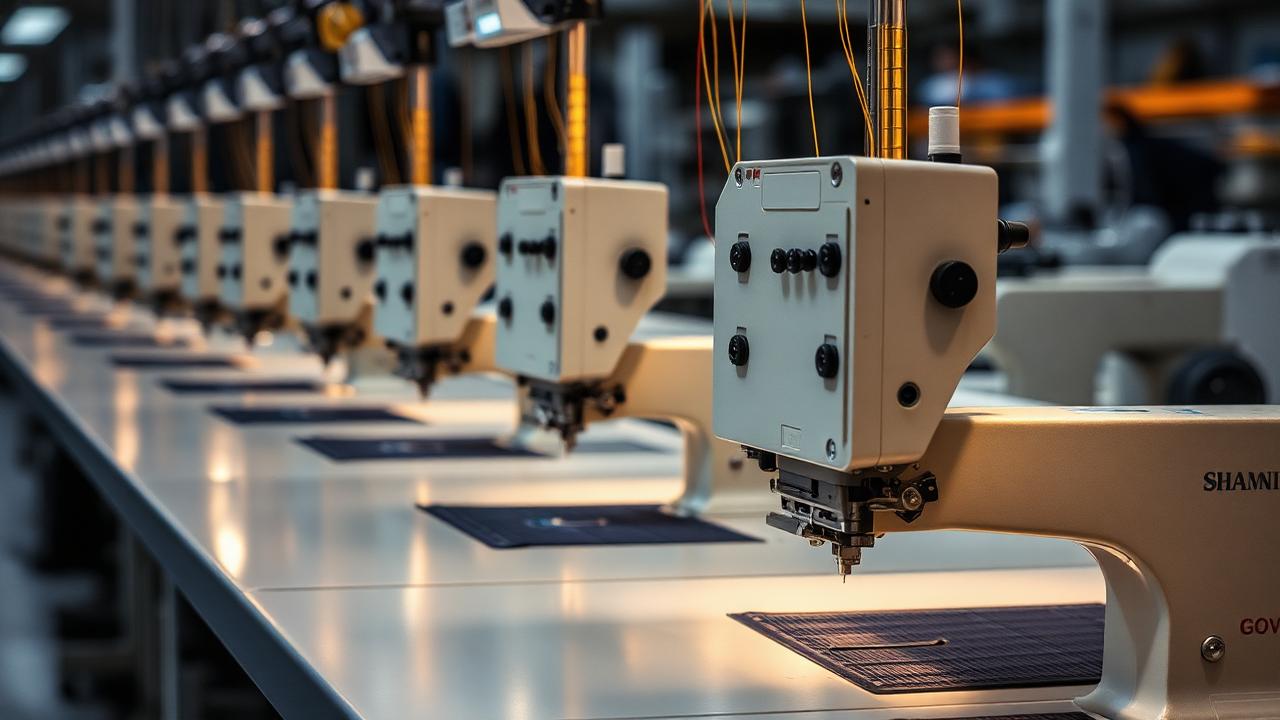
Machine selection is a quality decision. Overlock secures and trims, flatlock joins without bulk, and fusing changes fabric behaviour permanently — each one has settings that either protect the garment or quietly destroy it.
Every service, study and product on NOSK.life is free of charge — we never take a single penny from anyone.
How it works
1.Overlock (500-class)
Loopers wrap thread around the fabric edge while a knife trims it. Differential feed controls whether the seam waves or gathers; stitch width and bite decide seam strength on knits.
2.Flatlock (600-class)
Two fabric edges are butted or overlapped and covered top and bottom, giving a flat, low-friction seam used in activewear and performance garments.
3.Fusing press
Temperature, pressure and dwell time activate the interlining adhesive. All three must be verified together — a correct temperature with wrong dwell gives delamination after washing.
4.Verify with a peel and wash test
Run a bond strength peel test at every shift start, and a wash test on each new fabric–interlining combination before bulk.
Quick reference
- Overlock differential feed
- 0.7–1.3 typical range
- Flatlock stitch class
- 605 / 607 coverstitch
- Fusing temperature
- 120–150°C, fabric dependent
- Fusing dwell time
- 10–18 seconds
Checks you can run this week
- Log fusing temperature, pressure and dwell per shift with a bond test result.
- Set differential feed on the actual fabric before the line starts.
- Check needle and looper thread compatibility for stretch recovery.
Free downloads for this topic
Print-ready A4 PDF sheets from the NOSK.space garment media library — free of charge, no sign-up.
4-thread overlock diagram
Two needles, two loopers and the knife line, showing how the safety-stitch seam is built plus differential feed settings for knits.
Free studies and toolkits that use this
This explainer supports the following NOSK.space learning paths and toolkits — all free of charge, with no payments and no paywalls.
Free learning · Intermediate
Apparel Operations ExcellenceLine balancing, capacity planning, WIP control and OEE for cutting, sewing and finishing.
Free toolkit
Audit Readiness BinderA structured evidence index for social, chemical and quality audits, with owner and review columns.
Real contacts for this topic
Factories, mills, suppliers, buyers and industry bodies from the free NOSK.space garment directory that work directly with overlock, flatlock and fusing explained. Every detail below is published on the organisation's own site and each link opens that site — free of charge, no introductions sold, no commission taken.
JUKI Corporation
Tokyo · Japan
Industrial sewing machines, automated units and sewing systems
- Address
- 2-11-1 Tsurumaki, Tama-shi, Tokyo 206-8551, Japan
- Phone
- +81 42 357 2211
Brother Industries — Industrial Sewing
Nagoya · Japan
Industrial sewing machines, embroidery and direct-to-garment printing
- Address
- 15-1 Naeshiro-cho, Mizuho-ku, Nagoya 467-8561, Japan
Groz-Beckert
Albstadt · Germany
Sewing machine needles, knitting and felting needles
- Address
- Parkweg 1, 72458 Albstadt, Germany
- Phone
- +49 7431 10-0
Interloop Limited
Faisalabad · Pakistan
Hosiery, denim, knitted apparel and seamless activewear
- Address
- 1 KM Khurrianwala–Jaranwala Road, Khurrianwala, Faisalabad, Pakistan
- Phone
- +92 41 4360400
Where this fits in sourcing
This topic is used at the following stages of the free NOSK.space sourcing guide, which links each decision to the questions to ask and the real organisations to approach.
- Stage 4: Machinery, needles, thread and trims
Match the seam engineering to the machines and trims that actually exist on the line.
Common questions
- Why do fused parts bubble after washing?
- Usually shrinkage mismatch between shell fabric and interlining, or under-fusing. Pre-test the combination and correct the fusing recipe.
- Is any of this behind a paywall?
- Never. All NOSK.life media, studies and tools are free of charge.
Finished this explainer?
Tick it off to track your own progress in the free student portal. It is stored on this device only — no login, no account, no fees.
Jobs this knowledge leads to
Real garment industry roles that hire for exactly this skill, with the employers that recruit them. Free to browse — no fees, no commission.
Production & industrial engineering · Entry level
Production Supervisor / Line Chief
Owns one sewing line hour by hour: manpower, feeding, quality at source and the target board.
Open the role guideMaintenance & machine technology · Entry level
Sewing Machine Maintenance Technician
Keeps lockstitch, overlock, flatlock and special machines running, set correctly and safe.
Open the role guide
More free media
- How a lockstitch machine actually forms a stitch
Needle, hook, bobbin and take-up: the four-part cycle behind stitch class 301, and the settings that decide seam quality.
- Woven vs knit: how fabric construction changes everything
Warp and weft versus loops and courses — why the same fibre behaves completely differently once it is woven or knitted.
- How to read a fabric test report without guessing
GSM, shrinkage, colour fastness, pilling and tensile results — what each line means and which failures actually stop production.