
Recycled fibres, traceability and circular claims explained
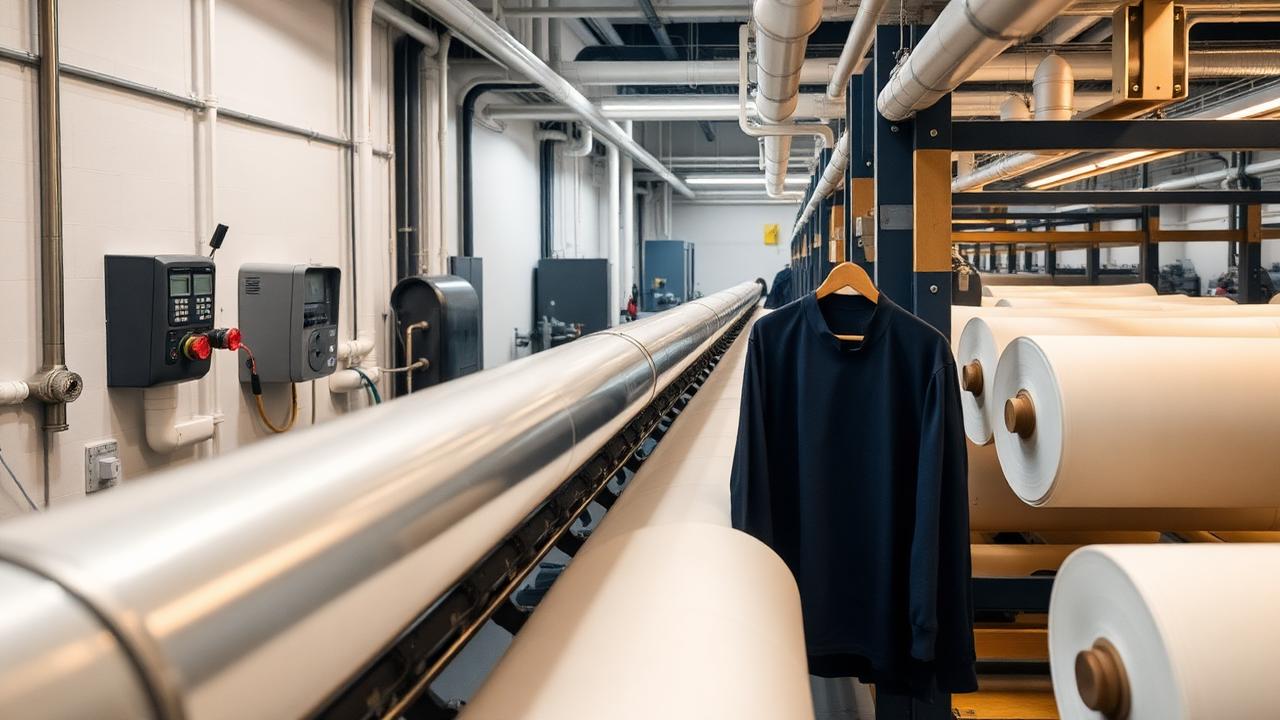
Circularity in apparel is mostly a documentation and design problem, not a marketing one. A recycled-content claim stands or falls on transaction certificates and material design decisions taken long before the garment is sewn.
Every service, study and product on NOSK.life is free of charge — we never take a single penny from anyone.
How it works
1.Know your recycled input
Mechanically recycled cotton has shorter fibres and usually needs blending; recycled polyester from bottle or textile feedstock behaves close to virgin but differs in dye affinity. Both change your strength, pilling and shade results.
2.Hold the chain of custody
Recycled claims rely on scheme certification and transaction certificates linking each step from feedstock to garment. Without an unbroken document trail, the content cannot legally be claimed regardless of what was actually used.
3.Design for recycling, not just from recycling
Mono-material construction, compatible trims, avoidable coatings and removable hardware decide whether the garment can be recycled at end of life. Fibre blends and bonded laminates are the main barriers.
4.Support the claim with test data
Verify performance on recycled blends — tensile, pilling, shade continuity across lots — and keep the results with the certificates so the claim survives an audit or a regulator's challenge.
Quick reference
- Recycled cotton blend
- Commonly 20–30% with virgin or polyester
- Claim requirement
- Unbroken transaction certificate trail
- Recyclability barrier
- Blends, bonded laminates, mixed trims
- Test focus
- Tensile, pilling, shade continuity per lot
Checks you can run this week
- Collect and file transaction certificates for every certified input lot.
- Reconcile claimed recycled volume against purchased certified volume each season.
- Review trims and coatings for recyclability at tech pack stage.
- Repeat pilling and shade tests per lot on recycled blends.
Free downloads for this topic
Print-ready A4 PDF sheets from the NOSK.space garment media library — free of charge, no sign-up.
Single jersey knit swatch card
Loop structure illustration with GSM range, stretch behaviour, expected shrinkage and ball-point needle sizes for cotton single jersey.
Denim 3/1 twill swatch card
Twill line diagram with weight in oz and g/m2, stretch ranges for elastane denim, shrinkage expectations and jeans-point needle sizes.
Free studies and toolkits that use this
This explainer supports the following NOSK.space learning paths and toolkits — all free of charge, with no payments and no paywalls.
Free learning · Advanced
Standards & Compliance MasterySocial, chemical and product-safety compliance: audit readiness, evidence packs and supplier governance.
Free learning · Intermediate
Sustainable Manufacturing EssentialsMaterials, water, energy and circularity — measurable sustainability for production teams.
Real contacts for this topic
Factories, mills, suppliers, buyers and industry bodies from the free NOSK.space garment directory that work directly with recycled fibres, traceability and circular claims explained. Every detail below is published on the organisation's own site and each link opens that site — free of charge, no introductions sold, no commission taken.
Inditex (Zara)
Arteixo · Spain
Retail group with published supplier standards and sourcing clusters
- Address
- Edificio Inditex, Avda. de la Diputación s/n, 15143 Arteixo, A Coruña, Spain
- Phone
- +34 981 185 400
H&M Group
Stockholm · Sweden
Global fashion retail group publishing a public supplier list
- Address
- Mäster Samuelsgatan 46A, SE-106 38 Stockholm, Sweden
- Phone
- +46 8 796 55 00
- info@hm.com
Levi Strauss & Co.
San Francisco · United States
Denim brand publishing supplier lists and worker wellbeing standards
- Address
- 1155 Battery Street, San Francisco, CA 94111, United States
- Phone
- +1 415 501 6000
Interloop Limited
Faisalabad · Pakistan
Hosiery, denim, knitted apparel and seamless activewear
- Address
- 1 KM Khurrianwala–Jaranwala Road, Khurrianwala, Faisalabad, Pakistan
- Phone
- +92 41 4360400
VITAS — Vietnam Textile and Apparel Association
Hanoi · Vietnam
National textile and apparel association of Vietnam
- Address
- Floor 15, C1 Building, Thanh Cong Office Complex, Ba Dinh, Hanoi, Vietnam
- Phone
- +84 24 3934 9608
Where this fits in sourcing
This topic is used at the following stages of the free NOSK.space sourcing guide, which links each decision to the questions to ask and the real organisations to approach.
- Stage 9: Sustainability and compliance
Verify environmental and traceability claims with evidence, not marketing.
Common questions
- Can we claim recycled content without certification?
- Not credibly. Buyers and regulators expect scheme certification and transaction certificates. Without them, describe the material factually in internal records and avoid a public claim.
- How much does this cost?
- Nothing. Every service, study and product on NOSK.life is free of charge — we never take a single penny from anyone.
Finished this explainer?
Tick it off to track your own progress in the free student portal. It is stored on this device only — no login, no account, no fees.
Jobs this knowledge leads to
Real garment industry roles that hire for exactly this skill, with the employers that recruit them. Free to browse — no fees, no commission.
Pattern, CAD & sampling · Mid level
Fabric Technologist
Approves fabric against the buyer's standard and prevents shading, shrinkage and performance failures reaching the line.
Open the role guideSustainability & chemical management · Mid level
Sustainability & Chemical Compliance Officer
Runs the chemical inventory, environmental data and traceability evidence buyers now audit as hard as quality.
Open the role guide
More free media
- Water, energy and chemicals: how impact is measured in a factory
Litres per kilogram, kWh per garment, ETP limits and MRSL compliance — the numbers a factory can actually measure and improve.
- Woven vs knit: how fabric construction changes everything
Warp and weft versus loops and courses — why the same fibre behaves completely differently once it is woven or knitted.
- How to read a fabric test report without guessing
GSM, shrinkage, colour fastness, pilling and tensile results — what each line means and which failures actually stop production.